


To experience winter in Mont-Tremblant with minimal impact, the best ways are under your own power, or behind a team of animal friends. No engine, no exhaust, just the crunch of snow and the cold air. This guide brings together our low-impact winter activities, the ones that let you get deep into the snowy forest while leaving it the way found it.
This guide is the companion to our Low-Impact Summer Guide, and it follows the same thinking. Several of these activities align with our Aventure Écotourisme Québec (AEQ) positioning and our commitment to responsible tourism, and we ask every guest to follow Leave No Trace principles in every season. Read about our Leave No Trace commitment.
What we mean by “low-impact” in winter
Every activity in our guide shares a few traits:
- No fossil fuels: you are powered by your own effort or by a team of animals, not an engine
- Quiet travel that keeps the winter forest peaceful for wildlife and other guests
- A light footprint on existing trail networks, with no need to clear new terrain
- Built around Leave No Trace practices and, for our animal activities, published welfare standards
Under your own power
The simplest low-impact winter activities need nothing but your legs and a bit of snow. They are quiet, they warm you up fast, and they leave no trace but footprints and ski tracks.
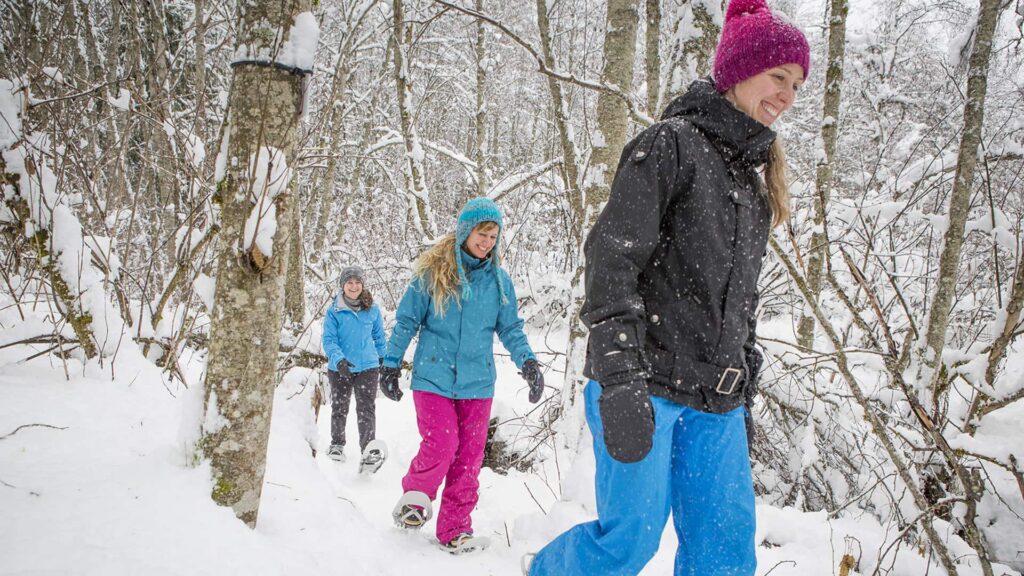
Snowshoeing: Strap on a pair of snowshoes and you can walk almost anywhere the snow is deep. It takes no lessons and very little practice, which makes it a good fit for families and first-timers who want to get off the packed paths and into the winter forest at their own pace. We have guided snowshoe tours and snowshoe rentals at the Tremblant resort, the Mont-Tremblant National Park, and Domaine Saint-Bernard.
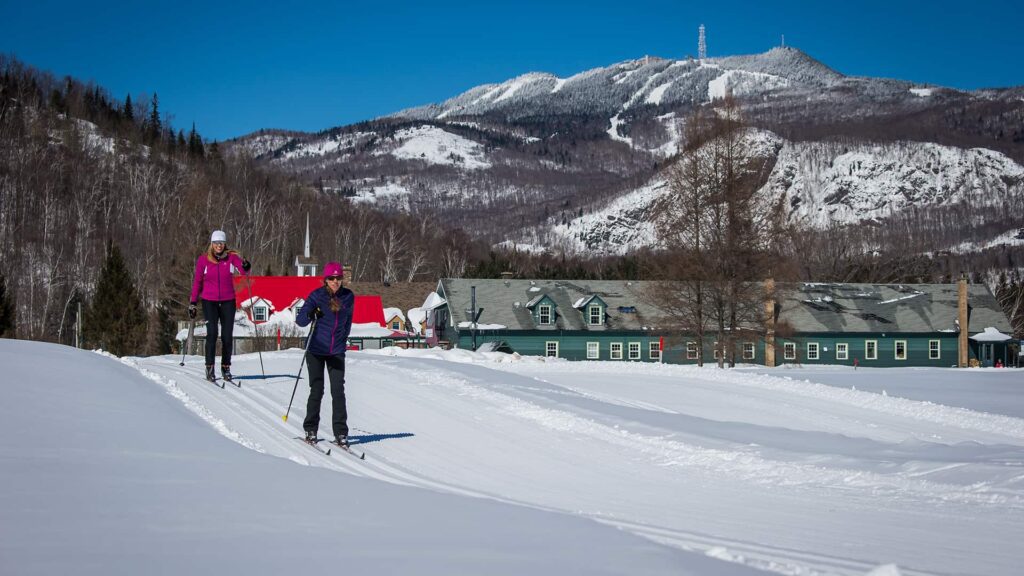
Cross-country skiing: A full-body work-out way to glide through the forest on groomed tracks. It takes a bit more technique than snowshoeing, but it lets you cover far more ground, and the effort keeps you warm even on the coldest days. We have lessons, guided tours, and rentals in Mont-Tremblant National Park and Domaine Saint-Bernard.
For guests who want more than a day out, spending the night in the winter forest is the most immersive low-impact experience we have.
A night in the trees
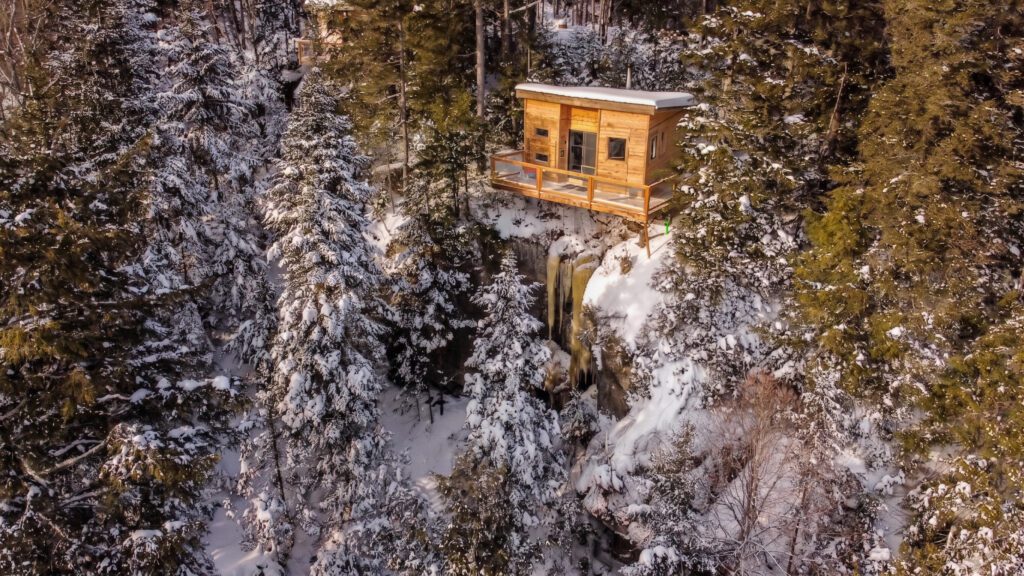
Winter Ready-to-camp treehouses: Sleep off-grid in a Treehouse raised up in the trees at Les Refuges Perchés, with the snowy forest all around you. The site has 36 km of trails for snowshoeing and cross-country skiing: bring your own gear or rent it on site. You leave a small carbon footprint and you wake to a silence you rarely find anywhere else. It is a night spent in the back-country, off-grid, surrounded by winter
Animal-drawn adventures
Long before engines, people moved through the winter forest behind dogs and horses. These activities keep that tradition alive, and they run on animal power rather than fossil fuels.
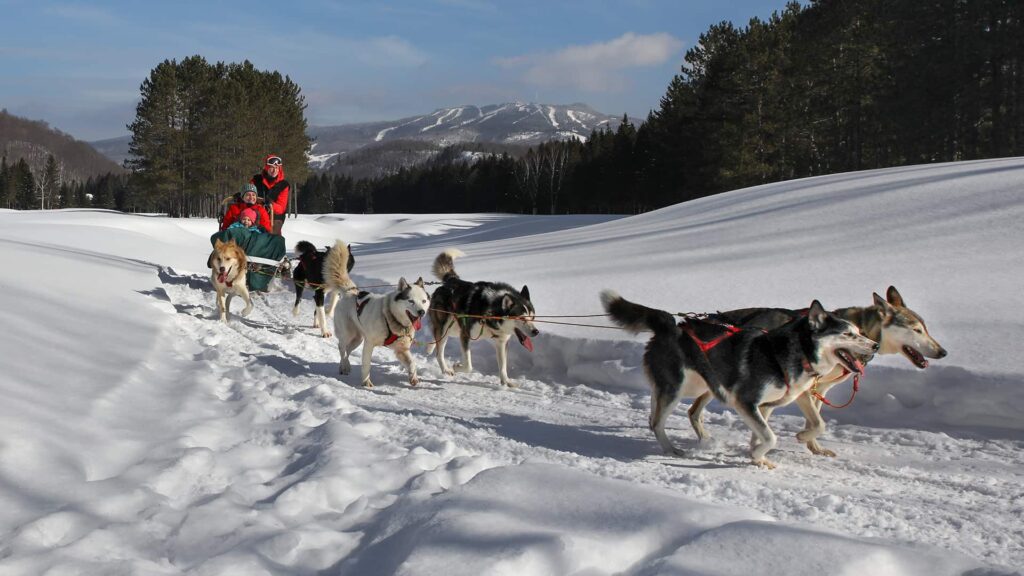
Dogsledding: Ride behind a team of Nordic dogs across the snow, and, on many departures, take a turn driving the sled yourself. Driving a dogsled takes focus and a steady hand, so your guide briefs you first: this is a sport, not a passive ride. The dogs set a pace that these breeds are built for, and the quiet cooperation of the running dog team is something you do not forget. We have five dog sledding activities across the Mont-Tremblant region, so you can pick the length and style that fits your group. Our dog sledding comparison table lays out the differences.
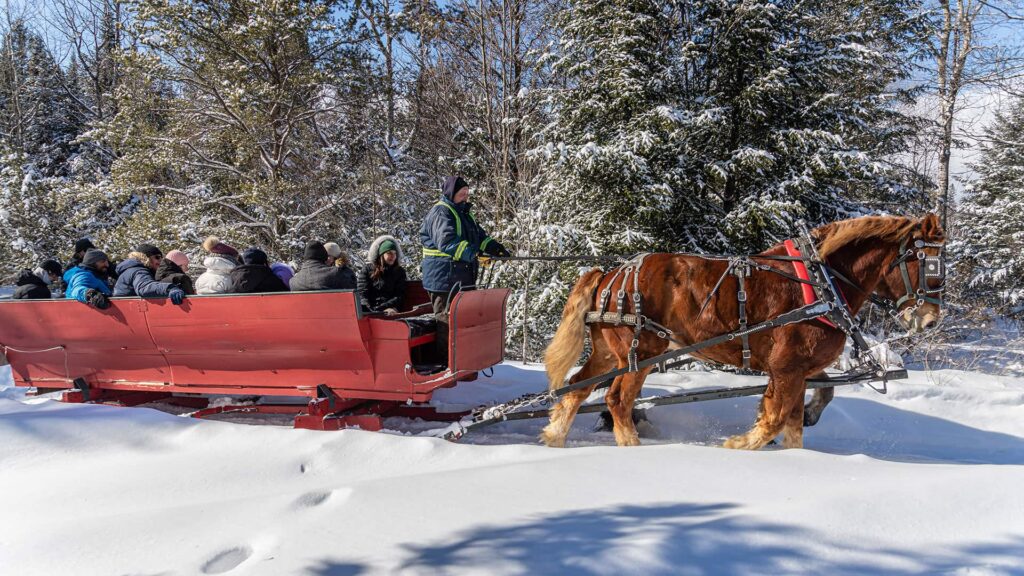
Horse-drawn sleigh ride: Settle under a blanket and let a team of horses pull you through the snow-covered forest. It is the slowest, calmest way to travel the winter landscape, and a favourite with families and groups who want to share the ride and the memories.
How we approach sled dog welfare and land use
Dog sledding raises fair questions about animal welfare and land use, and we would rather answer them openly than skip over them.
Nordic dogs are bred and trained to pull, and a well-run kennel is built around their health and their drive to run. The standards we set cover all the essentials and more:
- Year-round care: veterinary follow-up, proper feeding, and attention to each dog’s condition and weight
- Rest and rotation, so no team runs beyond what its fitness allows, in the cold these breeds are built for
- A plan for every dog’s whole life, including rehoming or keeping dogs once their running years are over
- Trails that follow existing networks rather than clearing new forest, which keeps the land-use footprint low
The same care extends to the horses behind our sleigh rides. If you want the full picture before you reserve, we publish our standards in detail. Read our sled dog welfare standards.
Frequently asked questions
What makes a winter activity “low-impact”?
A low-impact winter activity moves you by your own effort or by a team of animals, with no engine and no fuel. It stays on existing trails, keeps noise to a minimum, and leaves little behind. Snowshoeing, cross-country skiing, dog sledding, and horse-drawn sleigh rides all fit that description.
How do you care for your sled dogs?
Nordic dogs are bred to run, and the kennels we work with are built around their health and rest. That means year-round veterinary care, feeding matched to the work, rotation so no team is overrun, and a plan for each dog once its running years are done. We publish the full standards we hold our partners to. You can read them here.
Do I need experience or special gear?
None of these activities require previous experience, and your guide briefs you before you start. Snowshoeing and the sleigh ride suit almost any age. Cross-country skiing takes a little practice, and dog sledding asks for focus if you choose to drive. Dress in warm layers with good winter boots; specialized equipment is provided or available to rent.
Ready for a low-impact winter?
Winter departures fill up quickly, and snow conditions can shift, so we recommend reserving in advance. Browse our winter activities and reserve your spot, and we will see you out in the snow.